Our Authentic Italian Recipes
Welcome to PlateMuse Recipes, your culinary gateway to the rich and diverse world of Italian cuisine. Here, we celebrate the art of Italian cooking, from the rustic charm of traditional pasta dishes to the sophisticated elegance of regional specialties. Each recipe is crafted to bring the authentic flavors of Italy right into your home kitchen, ensuring a delightful and memorable dining experience. We believe that Italian cooking is more than just preparing food; it's about passion, family, and the joy of sharing a meal. Dive into our collection and discover the secrets behind beloved Italian classics, learn new techniques, and embark on a delicious journey through Italy's gastronomic landscape. Whether you're a seasoned chef or a novice cook, our detailed instructions and helpful tips will guide you every step of the way, making Italian cooking accessible and enjoyable for everyone.
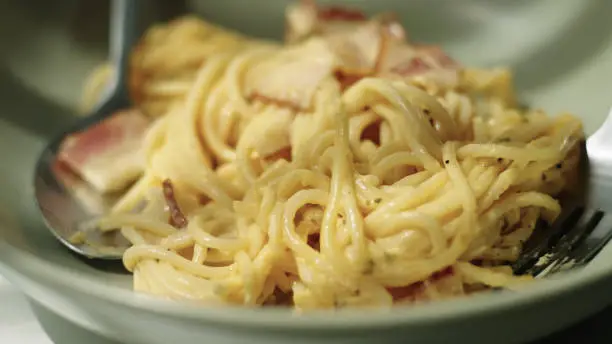
Classic Pasta Carbonara
Pasta Carbonara is a quintessential Roman pasta dish, celebrated for its rich, creamy texture and savory depth, achieved without a drop of cream! The magic lies in the emulsification of egg yolks, Pecorino Romano cheese, cured guanciale (or pancetta), and the starchy pasta water. This dish embodies simplicity and perfection, relying on the quality of its few ingredients. The guanciale is rendered until crispy, its fat becoming the base for the sauce. The hot pasta is then tossed with the egg mixture, creating a velvety coating that clings to every strand. A generous sprinkle of black pepper adds a subtle kick, balancing the richness. It's a dish that demands attention to detail but rewards with unparalleled flavor, making it a favorite among pasta lovers worldwide. Mastering Carbonara is a true testament to understanding Italian culinary principles.
Ingredients:
- 200g spaghetti or bucatini
- 100g guanciale (or pancetta), diced
- 2 large egg yolks + 1 whole egg
- 50g Pecorino Romano cheese, grated
- Freshly ground black pepper
- Salt for pasta water
Instructions:
- Cook pasta in salted boiling water until al dente. Reserve 1 cup of pasta water.
- While pasta cooks, render guanciale in a pan until crispy. Remove guanciale, leave fat in pan.
- In a bowl, whisk egg yolks, whole egg, Pecorino, and plenty of black pepper.
- Add hot, drained pasta to the pan with guanciale fat. Toss well.
- Quickly add egg mixture, stirring vigorously. Gradually add reserved pasta water until creamy.
- Stir in crispy guanciale. Serve immediately with more Pecorino and black pepper.

Authentic Margherita Pizza
The Margherita Pizza is a culinary icon, a testament to the fact that simplicity often yields the most profound flavors. Originating in Naples, this pizza is said to have been created in honor of Queen Margherita of Savoy, with its colors representing the Italian flag: red from tomatoes, white from mozzarella, and green from fresh basil. The key to an authentic Margherita lies in its high-quality ingredients and proper cooking. A thin, airy crust, made from finely milled flour, is topped with San Marzano tomato sauce, fresh mozzarella (preferably fior di latte or buffalo mozzarella), and a few fresh basil leaves. Cooked quickly at very high temperatures, ideally in a wood-fired oven, the crust develops a beautiful char, the cheese melts perfectly, and the basil infuses its aromatic essence. It's a dish that celebrates the purity of its components, offering a harmonious blend of textures and tastes.
Ingredients:
- 1 ball Neapolitan pizza dough
- 1/2 cup San Marzano tomato sauce
- 100g fresh mozzarella, torn or sliced
- Fresh basil leaves
- Extra virgin olive oil
- Salt to taste
Instructions:
- Preheat oven with pizza stone to highest setting (500°F/260°C or higher).
- Stretch dough into a 10-12 inch circle.
- Spread tomato sauce evenly, leaving a border.
- Distribute mozzarella and a few basil leaves. Drizzle with olive oil.
- Carefully transfer pizza to hot stone. Bake 8-12 minutes, or until crust is golden and cheese is bubbly.
- Garnish with more fresh basil before serving.
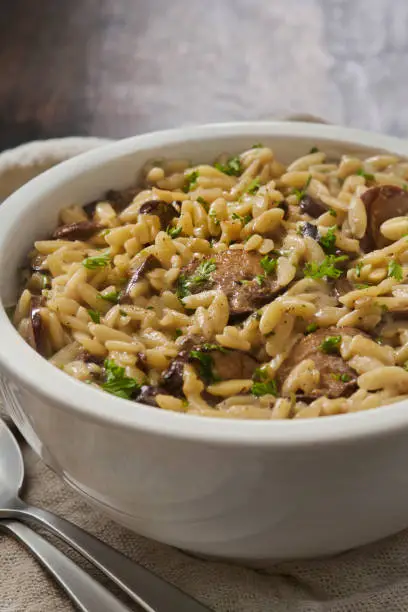
Creamy Mushroom Risotto
Risotto is a northern Italian rice dish cooked with broth until it reaches a creamy consistency. Unlike other rice dishes, risotto is a labor of love, requiring constant stirring and gradual addition of liquid to coax the starch out of the rice grains, resulting in its characteristic velvety texture. This mushroom risotto recipe highlights earthy flavors, combining sautéed mushrooms with Arborio rice, white wine, and vegetable or chicken broth. The process involves toasting the rice, deglazing with wine, and then slowly adding warm broth, ladle by ladle, allowing each addition to be absorbed before adding the next. Finishing with butter and Parmesan cheese at the end, a technique known as "mantecatura," gives the risotto its final luxurious creaminess and glossy finish. It's a comforting and elegant dish, perfect for a cozy evening.
Ingredients:
- 1 tbsp olive oil
- 1 tbsp butter
- 1 shallot, finely chopped
- 200g mixed mushrooms, sliced
- 180g Arborio rice
- 60ml dry white wine
- 750ml warm vegetable or chicken broth
- 50g Parmesan cheese, grated
- 2 tbsp butter, cold
- Fresh parsley, chopped (for garnish)
- Salt and pepper to taste
Instructions:
- Heat olive oil and 1 tbsp butter in a large pan over medium heat. Sauté shallot until softened.
- Add mushrooms and cook until browned and tender. Remove half the mushrooms and set aside.
- Add Arborio rice to the pan and toast for 2 minutes, stirring constantly.
- Pour in white wine and stir until absorbed.
- Begin adding warm broth, one ladleful at a time, stirring continuously. Wait until each ladleful is almost absorbed before adding the next. This process takes about 20-25 minutes.
- Once rice is al dente and creamy, remove from heat. Stir in remaining cold butter, Parmesan cheese, and reserved mushrooms.
- Cover and let rest for 2 minutes. Serve immediately, garnished with fresh parsley.
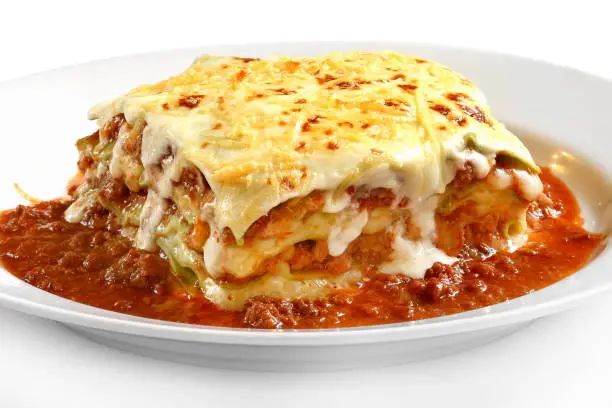
Classic Beef Lasagna
Lasagna, a beloved baked pasta dish, is the epitome of Italian comfort food. This classic version features layers of wide pasta sheets, rich beef ragù (meat sauce), creamy béchamel sauce, and generous amounts of Parmesan and mozzarella cheese, all baked to golden perfection. The ragù is slow-cooked to develop deep, complex flavors, often incorporating tomatoes, aromatic vegetables like carrots and celery, and tender ground beef. The béchamel provides a luxurious, silky counterpoint to the robust meat sauce, ensuring every bite is moist and flavorful. Assembling lasagna is an art, with each layer contributing to the final harmony of textures and tastes. Baking allows the flavors to meld and the cheese to bubble and brown, creating an irresistible aroma that fills the kitchen. It's a dish perfect for family gatherings or special occasions, offering hearty satisfaction and a taste of Italian tradition.
Ingredients:
- 12 lasagna noodles, oven-ready or pre-boiled
- For the Beef Ragù:
- 500g ground beef
- 1 onion, chopped
- 2 cloves garlic, minced
- 800g crushed tomatoes
- 100ml red wine (optional)
- 1 tsp dried oregano
- Salt and pepper to taste
- For the Béchamel Sauce:
- 50g butter
- 50g all-purpose flour
- 500ml milk, warm
- Pinch of nutmeg
- Salt and white pepper to taste
- 200g mozzarella cheese, shredded
- 100g Parmesan cheese, grated
Instructions:
- **Prepare Beef Ragù:** Brown ground beef. Drain fat. Add onion and garlic, cook until soft. Stir in red wine (if using) and cook until reduced. Add crushed tomatoes, oregano, salt, and pepper. Simmer for at least 30 minutes (longer for richer flavor).
- **Prepare Béchamel Sauce:** Melt butter in a saucepan. Whisk in flour to form a roux. Cook for 1-2 minutes. Gradually whisk in warm milk until smooth and thickened. Season with nutmeg, salt, and white pepper.
- **Assemble Lasagna:** Spread a thin layer of ragù at the bottom of a 9x13 inch baking dish. Layer with lasagna noodles, then béchamel, then ragù, then mozzarella and Parmesan. Repeat layers until ingredients are used, ending with a layer of béchamel, mozzarella, and Parmesan.
- **Bake:** Cover with foil and bake at 190°C (375°F) for 25 minutes. Remove foil and bake for another 15-20 minutes, or until golden and bubbly.
- Let rest for 10-15 minutes before serving.

Delicious Tiramisu
Tiramisu, meaning "pick me up" or "cheer me up" in Italian, is a classic no-bake dessert that perfectly balances rich, sweet, and bitter flavors. It consists of layers of coffee-soaked ladyfingers, a creamy mascarpone cheese mixture, and a dusting of cocoa powder. The key to a great tiramisu lies in the quality of the ingredients: strong espresso, high-fat mascarpone, and fresh eggs. The ladyfingers are briefly dipped in cooled espresso (sometimes spiked with a liqueur like Marsala wine or rum) to absorb flavor without becoming soggy. The mascarpone cream is lightened with whipped egg yolks and sometimes egg whites, creating a delicate yet decadent texture. Chilling the tiramisu for several hours allows the flavors to meld and the dessert to set, resulting in a harmonious and utterly irresistible treat. It's a dessert that truly lives up to its name, offering a delightful boost of energy and happiness with every spoonful.
Ingredients:
- 250g mascarpone cheese, chilled
- 3 large egg yolks
- 75g granulated sugar
- 1 cup strong brewed espresso, cooled
- 2 tbsp coffee liqueur (e.g., Kahlúa, Marsala wine, optional)
- 200g ladyfingers (savoiardi)
- Unsweetened cocoa powder, for dusting
Instructions:
- In a heatproof bowl set over a saucepan of simmering water (bain-marie), whisk egg yolks and sugar until pale and thickened (zabaglione-like consistency). Remove from heat and let cool slightly.
- In a separate bowl, gently fold the cooled zabaglione into the mascarpone cheese until just combined and smooth. Be careful not to overmix.
- In a shallow dish, combine cooled espresso and coffee liqueur (if using).
- Quickly dip each ladyfinger into the coffee mixture, just enough to moisten, not saturate.
- Arrange a single layer of soaked ladyfingers at the bottom of an 8x8 inch (or similar) serving dish.
- Spread half of the mascarpone cream over the ladyfingers.
- Repeat with another layer of dipped ladyfingers and the remaining mascarpone cream.
- Cover the dish and refrigerate for at least 4 hours, or preferably overnight, to allow the tiramisu to set and flavors to meld.
- Before serving, dust generously with unsweetened cocoa powder.
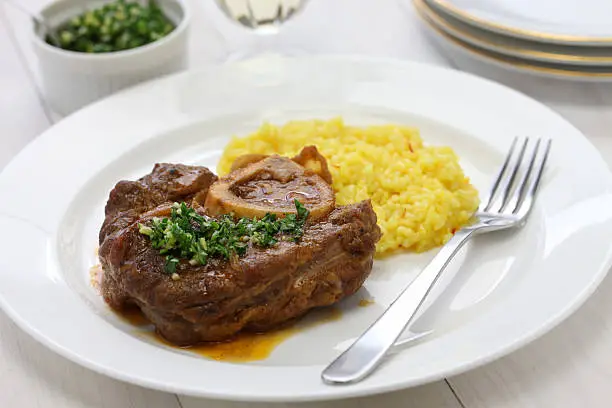
Osso Buco with Gremolata
Osso Buco, a culinary masterpiece from Lombardy, Italy, translates literally to "bone with a hole," referring to the marrow hole at the center of the veal shanks. This slow-braised dish features cross-cut veal shanks, typically from the hind leg, cooked until fork-tender in a rich, aromatic white wine and vegetable broth. The long, slow cooking process breaks down the connective tissues, resulting in incredibly succulent meat that falls off the bone. The star of the show, however, is often the bone marrow, which, when scooped out and spread on crusty bread, adds an unparalleled richness to the meal. Traditionally, Osso Buco is served with a vibrant gremolata – a fresh condiment made from lemon zest, garlic, and parsley – which cuts through the richness of the meat and adds a burst of freshness. It's a sophisticated and deeply satisfying dish, perfect for a special occasion or a hearty winter meal.
Ingredients:
- 4 veal shanks (osso buco cuts), about 2-3 cm thick
- 1/2 cup all-purpose flour, for dredging
- 2 tbsp olive oil
- 1 tbsp butter
- 1 large onion, finely chopped
- 2 carrots, finely chopped
- 2 celery stalks, finely chopped
- 1 cup dry white wine
- 400g canned crushed tomatoes
- 4 cups beef broth
- 2 bay leaves
- Fresh thyme sprigs
- Salt and freshly ground black pepper to taste
- For the Gremolata:
- Zest of 1 large lemon
- 2 cloves garlic, minced
- 1/4 cup fresh parsley, finely chopped
Instructions:
- **Prepare Veal:** Pat veal shanks dry. Season with salt and pepper, then dredge lightly in flour, shaking off excess.
- **Sear Veal:** Heat olive oil and butter in a large Dutch oven or oven-safe pot over medium-high heat. Sear veal shanks on all sides until golden brown. Remove and set aside.
- **Sauté Vegetables:** Add onion, carrots, and celery to the pot. Sauté until softened, about 8-10 minutes.
- **Deglaze:** Pour in white wine, scraping up any browned bits from the bottom of the pot. Cook until reduced by half.
- **Braise:** Stir in crushed tomatoes, beef broth, bay leaves, and thyme. Bring to a simmer. Return veal shanks to the pot, ensuring they are mostly submerged.
- **Bake:** Cover the pot and transfer to a preheated oven at 160°C (325°F). Braise for 2 to 2.5 hours, or until veal is fork-tender.
- **Prepare Gremolata:** While the osso buco braises, combine lemon zest, minced garlic, and chopped parsley in a small bowl.
- **Serve:** Remove bay leaves and thyme sprigs from the pot. Serve osso buco hot, garnished generously with gremolata. Traditionally served with risotto alla Milanese or polenta.
Fascinating Italian Food Facts
Italian cuisine is one of the most beloved and influential culinary traditions in the world, renowned for its regional diversity, fresh ingredients, and emphasis on simple yet profound flavors. Beyond the popular pizzas and pastas, there's a rich tapestry of history and culture woven into every dish. For instance, did you know that tomatoes, now synonymous with Italian cooking, were not native to Italy? They were introduced from the Americas in the 16th century but were initially viewed with suspicion and even considered poisonous. It took centuries for them to become a staple, largely thanks to their adoption in Southern Italy, particularly Naples, where they became integral to pizza and pasta sauces.
The concept of "pasta" itself is incredibly broad in Italy, encompassing over 300 different shapes, each designed to hold specific sauces in unique ways. From the long strands of spaghetti and linguine to the tubular rigatoni and penne, and the intricate shapes like orecchiette and farfalle, every pasta has its purpose. The notion that pasta must be cooked "al dente" (to the tooth) is a fundamental principle, ensuring a pleasant chewiness and preventing it from becoming mushy. This precise cooking method is a hallmark of authentic Italian pasta preparation.
Regional variations are a cornerstone of Italian cuisine. Northern Italy, with its cooler climate and fertile plains, is known for its use of butter, rice (think risotto), and polenta, as well as rich, slow-cooked meat dishes. Emilia-Romagna, for example, is the birthplace of Parmigiano Reggiano, balsamic vinegar, and prosciutto di Parma. Central Italy, including Tuscany and Umbria, focuses on hearty peasant dishes, robust olive oils, and grilled meats. Southern Italy, with its Mediterranean climate, relies heavily on olive oil, fresh vegetables, seafood, and, of course, tomatoes. Sicily, for instance, boasts unique Arab and North African influences in its sweet and savory dishes.
Coffee culture in Italy is also distinct. Espresso is not just a drink; it's a ritual. Italians typically drink espresso quickly, often standing at a bar. Cappuccinos are strictly a morning beverage, rarely consumed after noon, and certainly not with a meal. The idea of adding milk to coffee later in the day is generally frowned upon. Gelato, the Italian equivalent of ice cream, is another fascinating subject. Unlike traditional ice cream, gelato is made with more milk than cream, less egg yolk, and is churned at a slower speed, resulting in a denser, richer, and more intensely flavored product with less air. It's also served at a slightly warmer temperature, enhancing its creamy texture and flavor release.
The tradition of "aperitivo" is a cherished part of Italian social life. It's a pre-dinner drink, often accompanied by small snacks, meant to stimulate the appetite and provide a moment of relaxation before the evening meal. This isn't just about drinking; it's about socializing and unwinding. Finally, the Mediterranean diet, largely inspired by traditional Italian eating patterns, is globally recognized for its health benefits, emphasizing whole foods, healthy fats, and a balanced approach to eating. This highlights that Italian food is not only delicious but also inherently wholesome when prepared with fresh, seasonal ingredients.
Essential Italian Cooking Tips
Mastering Italian cooking doesn't require a culinary degree, but a few key principles can elevate your dishes from good to truly exceptional. The foundation of Italian cuisine lies in simplicity and the quality of ingredients. Always prioritize fresh, seasonal produce, good quality olive oil, and authentic cheeses. Avoid overcomplicating recipes; often, fewer, better ingredients yield superior results.
**1. Don't Overcook Your Pasta:** This is perhaps the most crucial rule. Pasta should always be cooked "al dente," meaning firm to the bite. It continues to cook slightly after draining, especially when tossed with hot sauce. Check the package instructions but start tasting a minute or two before the suggested time. The slight resistance ensures a pleasant texture and better absorption of sauce.
**2. Salt Your Pasta Water Generously:** The water for cooking pasta should be "as salty as the sea." This is the only opportunity to season the pasta itself from the inside out. A good rule of thumb is about 1-2 tablespoons of salt per gallon of water. Don't worry, most of it goes down the drain, but enough is absorbed to make a significant difference in flavor.
**3. Reserve Pasta Water:** Before draining your pasta, always reserve a cup or two of the starchy cooking water. This liquid is gold! It's essential for emulsifying sauces, helping them cling to the pasta, and achieving that perfect creamy consistency, especially for dishes like Carbonara or Cacio e Pepe. It adds body and helps bind the sauce without needing heavy cream.
**4. Build Flavor with a Soffritto:** Many Italian dishes begin with a soffritto – a base of finely diced onion, carrot, and celery sautéed in olive oil until soft and aromatic. This trio forms the flavor backbone for countless sauces, soups, and braises, adding depth and sweetness. Take your time with this step; don't rush it.
**5. Use Fresh Herbs, Wisely:** Fresh basil, parsley, oregano, and rosemary are staples. Add delicate herbs like basil and parsley at the end of cooking to preserve their vibrant flavor and color. Hardier herbs like rosemary and oregano can be added earlier to infuse their aroma into slow-cooked dishes.
**6. Don't Skimp on Good Olive Oil:** Extra virgin olive oil is not just a cooking fat; it's a flavor enhancer. Use a good quality, flavorful olive oil for finishing dishes, drizzling over salads, or simply for dipping bread. For cooking, a good quality regular olive oil is sufficient.
**7. Embrace Garlic (but don't burn it):** Garlic is fundamental, but its use varies. For a subtle flavor, add whole cloves to oil and remove them after infusing. For stronger flavor, mince or slice it. Be careful not to burn garlic, as it turns bitter very quickly.
**8. Finish with Cheese (Parmesan/Pecorino):** A final grating of fresh Parmesan (Parmigiano Reggiano) or Pecorino Romano cheese adds a salty, umami kick and helps to bind flavors. Always use freshly grated cheese for the best taste and texture.
**9. Let Flavors Meld:** Many Italian dishes, especially sauces and stews, taste even better the next day after the flavors have had time to meld and deepen. Don't be afraid to make larger batches and enjoy leftovers.
**10. Cook with Love and Patience:** Italian cooking is an act of love. Take your time, enjoy the process, and taste as you go. The passion you put into your cooking will shine through in the final dish. Buon appetito!
Our Commitment to Your Satisfaction
At PlateMuse Recipes, your satisfaction is at the heart of everything we do. We are passionately dedicated to providing you with an exceptional culinary experience, starting from the moment you visit our website to the delicious outcome of your cooking endeavors. Our team meticulously curates and tests each recipe to ensure accuracy, clarity, and, most importantly, authentic Italian flavor. We understand that cooking can sometimes be challenging, and our goal is to make it as enjoyable and rewarding as possible for every home cook, regardless of their skill level.
We value your feedback immensely. Your comments, suggestions, and even criticisms help us to continuously improve our content and services. Whether you have a question about a recipe, a suggestion for a new dish you'd like to see, or an issue with the website, please do not hesitate to reach out to us through our contact page. We are committed to responding promptly and thoughtfully to all inquiries. Our community of food lovers is growing, and we strive to foster an environment where everyone feels inspired and supported in their culinary journey. Thank you for choosing PlateMuse Recipes; we hope our passion for Italian food translates into delightful meals in your kitchen.
Disclaimer
The information provided on PlateMuse Recipes (the "Website") is for general informational and educational purposes only. All content, including recipes, cooking tips, food facts, and other culinary advice, is provided in good faith. However, we make no representation or warranty of any kind, express or implied, regarding the accuracy, adequacy, validity, reliability, availability, or completeness of any information on the Website. Your reliance on any information provided on this Website is solely at your own risk.
**Health and Dietary Information:** The recipes and dietary information presented on PlateMuse Recipes are not intended to be a substitute for professional medical advice, diagnosis, or treatment. Always seek the advice of your physician or other qualified health provider with any questions you may have regarding a medical condition or dietary needs. We do not guarantee that any recipe or ingredient listed is suitable for all individuals, especially those with allergies, intolerances, or specific dietary restrictions. It is your responsibility to be aware of your own allergies and dietary needs and to adapt recipes accordingly. Always read product labels and consult with a healthcare professional if you have any concerns.
**Recipe Accuracy and Results:** While we strive to provide accurate and easy-to-follow recipes, cooking results can vary significantly due to factors such as ingredient quality, cooking equipment, individual cooking techniques, and environmental conditions. We cannot guarantee that following our recipes will yield the exact same results as depicted or described. We encourage users to use their best judgment and adapt recipes as needed based on their experience and preferences. PlateMuse Recipes shall not be held responsible for any adverse effects or consequences resulting from the use of the recipes or information on this Website.
**External Links:** The Website may contain links to other websites or content belonging to or originating from third parties. Such external links are not investigated, monitored, or checked for accuracy, adequacy, validity, reliability, availability, or completeness by us. We do not warrant, endorse, guarantee, or assume responsibility for the accuracy or reliability of any information offered by third-party websites linked through the Website or any website or feature linked in any banner or other advertising. We will not be a party to or in any way be responsible for monitoring any transaction between you and third-party providers of products or services.
**Copyright and Intellectual Property:** All content on PlateMuse Recipes, including text, images, graphics, and design, is the property of PlateMuse Recipes unless otherwise stated, and is protected by copyright and intellectual property laws. You may not reproduce, distribute, modify, display, or create derivative works of any content from this Website without our prior written permission. Recipes are often a combination of traditional knowledge and creative adaptation; while we share them freely for personal use, commercial reproduction is prohibited.
**Changes to Information:** We reserve the right to modify, update, or remove any content on the Website at any time without prior notice. While we endeavor to keep the information up-to-date and correct, we make no representations or warranties of any kind, express or implied, about the completeness, accuracy, reliability, suitability, or availability with respect to the Website or the information, products, services, or related graphics contained on the Website for any purpose.
By using PlateMuse Recipes, you hereby agree to this disclaimer and its terms. If you do not agree with any part of this disclaimer, please do not use our Website. Your continued use of the Website following the posting of changes to this disclaimer will be deemed your acceptance of those changes.